The Mauryan Empire was one of the most important political powers in ancient India, flourishing from around 322 to 185 BCE. Founded by Chandragupta Maurya, the empire expanded across a large part of the Indian subcontinent and reached another important stage under rulers such as Bindusara and Ashoka.
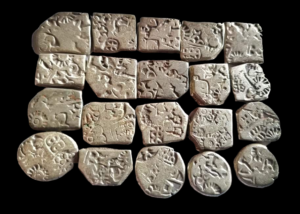
The coins associated with the Mauryan period provide an important glimpse into the economic and commercial life of ancient India. Unlike many later Indian coins, Mauryan-period coinage is particularly known for its punch-marked designs, where individual symbols were struck onto the surface of the metal rather than being produced from a single engraved coin die.
The Reserve Bank of India notes that punch-marked coins were among the earliest documented forms of Indian coinage and broadly distinguishes an earlier Janapada phase from a later phase associated with the Imperial Mauryan period.

The Mauryan Empire and its Coinage
The Mauryan Empire began with Chandragupta Maurya around the late 4th century BCE. Its territory expanded considerably, and the period witnessed significant growth in administration, trade and urban centres.
Coinage played an important role in this developing monetary economy. Mauryan-period punch-marked coins are generally associated with multiple symbols applied using separate punches. The Reserve Bank of India’s Museum notes that these motifs included representations inspired by nature, including the sun, animals, trees and hills, as well as geometric symbols.
The British Museum also identifies a distinct group of Mauryan punch-marked coins, describing examples from northern India as dating to the Mauryan period.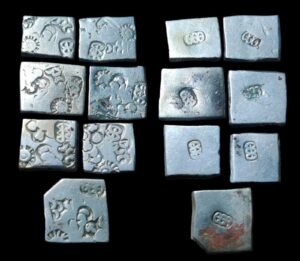
What Are Punch-Marked Coins?
Punch-marked coins are named after the method used to produce them.
Instead of engraving a complete design onto a pair of dies and striking the coin between them, individual symbols were punched onto pieces of metal using separate punches.
As a result, the surfaces of these coins can look quite different from the familiar portrait coins of later Indian and Hellenistic traditions.
The symbols may appear individually or in groups, and their arrangement can vary from one coin to another.
This is one of the reasons punch-marked coins are particularly fascinating to collectors: every coin can preserve a slightly different combination of ancient symbols and marks.

What Symbols Appear on Mauryan Coins?
One of the most interesting features of Mauryan-period punch-marked coins is their variety of symbols.
Commonly encountered motifs include:
Sun symbols
Animal motifs
Trees and plant forms
Hills or geometric forms
Other symbolic and abstract designs
The exact meaning of every individual punch should not always be assumed with certainty. Some symbols have been interpreted in different ways by scholars, and identification often depends on the complete combination of marks, fabric, weight, metal and other characteristics.
This makes the study of ancient Indian coins much more than simply recognising one symbol.
Did Mauryan Coins Show the Ruler’s Portrait?
Generally, no.
This is an important difference between Mauryan punch-marked coinage and many later coin traditions.
The British Museum notes that even Ashoka did not place his portrait or name on the punch-marked coins attributed to his period.
Instead, the coins relied heavily on symbolic marks.
This makes Mauryan coins especially interesting from a historical perspective because they represent a very different approach to communicating authority and value from the portrait coinage that became prominent in several later traditions.
Silver and Copper Coinage
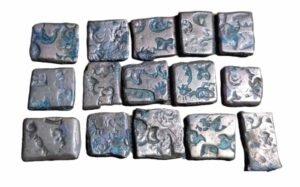
Punch-marked coins are most commonly associated with silver, although copper examples are also known in the broader tradition of early Indian coinage.
The RBI describes early Indian punch-marked coins as being mostly made of silver, while its discussion of ancient Indian coinage also recognises copper among the metals used in early Indian monetary systems.
For collectors, the metal is therefore only one part of identification. The shape, fabric, weight, punch marks, symbols and historical attribution all need to be considered together.
Why Are Mauryan Coins Important to Collectors?
Mauryan coins connect numismatics directly with one of the formative periods of Indian history.
A small ancient coin can provide clues about:
Ancient trade and commerce
Monetary practices
Manufacturing techniques
Symbolic traditions
The development of early Indian coinage
The economic world of the Mauryan period
The RBI also highlights the broader historical importance of Indian coins as evidence for political and economic changes across different periods.
For collectors, this combination of historical significance and distinctive design makes Mauryan-period coinage an especially rewarding area of ancient Indian numismatics.
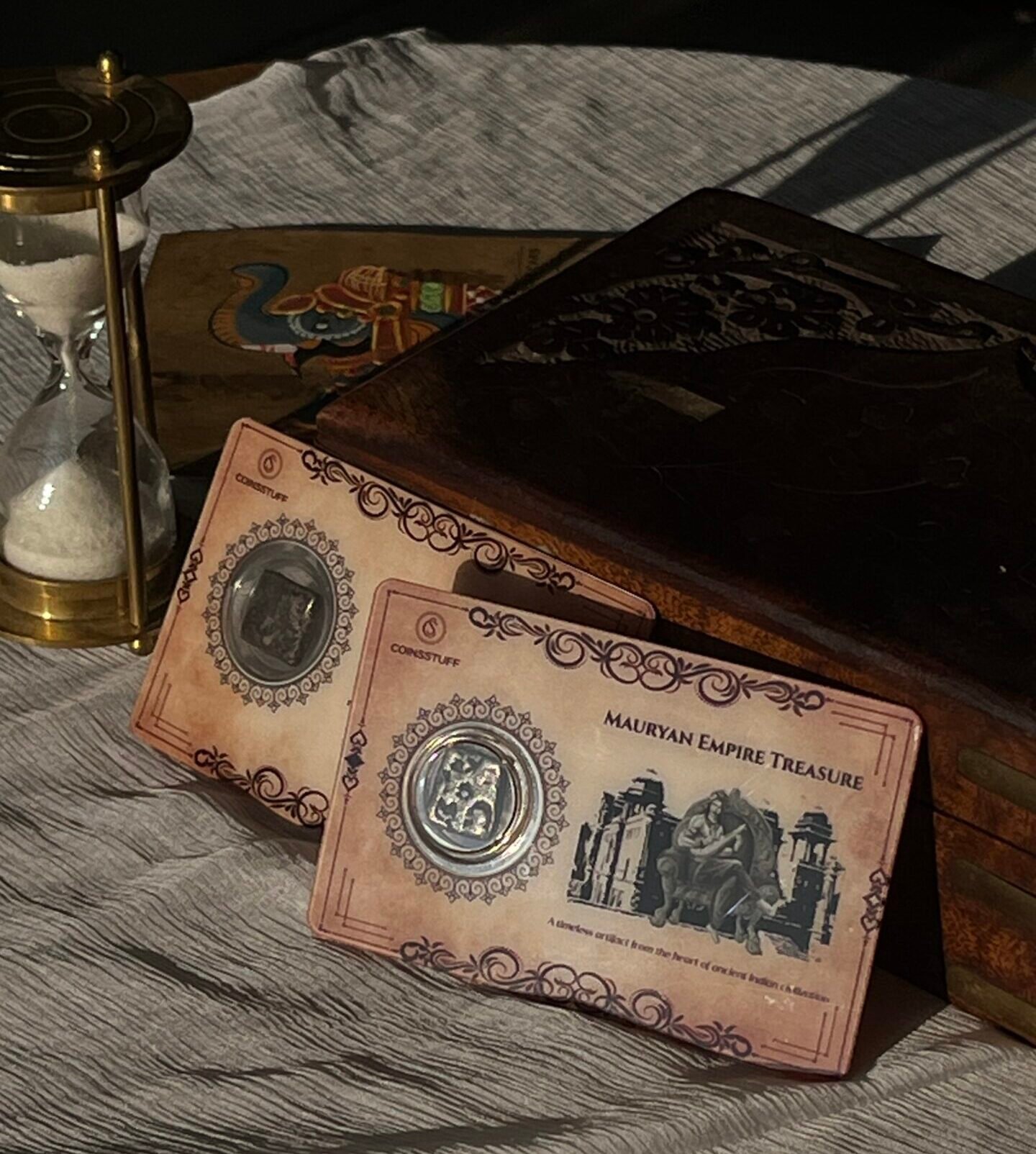
Mauryan Empire Legacy Copper Coin Card
At Coinsstuff, we have created the Mauryan Empire Legacy Copper Coin Card to make this part of India’s numismatic history accessible to collectors and history enthusiasts.
The card presents an authentic ancient copper coin in a display-ready format along with historical information about the Mauryan period.

Explore the Mauryan Empire Legacy Copper Coin Card:
https://www.coinsstuff.com/product/mauryan-legacy-copper-coin-card/
Start Exploring Ancient Indian Coins
The Mauryan period represents an important chapter in the development of Indian coinage. From the distinctive punch-marked technique to the variety of symbols found on these ancient pieces, Mauryan coins offer collectors a tangible connection to India’s early monetary history.
If you are interested in ancient Indian coins, Mauryan coinage or other historical dynasties, explore the Coinsstuff Coin Library and our collection of ancient coins.